Solder Fume Extractor
Capture solder smoke, flux fumes, and airborne particles at the source for a cleaner and safer electronics workspace.
FC-2001S
For hobby electronics and occasional soldering.
FC-2001A
Quiet airflow for makers and repair benches.
FC-100A
Professional-grade filtration for electronics workstations.
FC-150
Higher airflow with remote-control convenience for daily electronics work.
Learn more about Complete 2026 Solder Fume Extractor Guide
-
Fumeclear® FC-2001A Fume Extractor for Soldering
Sale priceFrom $28.99 USD Regular price $129.00Unit price-
Fumeclear FC-100A Solder Fume Extractor with Remote Control – Desktop Smoke Absorber & HEPA Filter
Sale price $288.99 USD Regular price $339.99Unit price-
Fumeclear® FC-100A Solder Fume Extractor - 99.97% Filtration for Safe Soldering
Sale priceFrom $258.99 USD Regular price $288.99Unit price-
Fumeclear®FC-150 Solder Smoke Extractor with LCD Display
Sale price $379.99 USD Regular price $399.99Unit price-


Why Use a Solder Fume Extractor?
Soldering fumes may contain airborne particles, flux vapors, and odors that can accumulate in indoor workspaces over time. A solder fume extractor helps capture smoke at the source for a cleaner, safer, and more comfortable soldering environment.
Frequently Asked Questions
Are solder fumes actually harmful?
Are solder fumes actually harmful?
Soldering fumes mainly come from flux and rosin during the soldering process. Long-term exposure in poorly ventilated spaces may cause irritation and discomfort. A solder fume extractor helps capture fumes and airborne particles at the source.
Do hobbyists really need a solder fume extractor?
Do hobbyists really need a solder fume extractor?
For occasional soldering, some hobbyists use a small fan or open window. However, a solder fume extractor provides more effective smoke capture and improves comfort during longer soldering sessions. Compact models like the FC-2001S are popular for hobby electronics workbenches.
Is a small desk fan enough for soldering fumes?
Is a small desk fan enough for soldering fumes?
A desk fan may help move fumes away from your face, but it does not actually filter airborne particles or odors. A proper solder fume extractor with filtration is more effective for indoor workspaces.
What filter is best for solder fumes?
What filter is best for solder fumes?
A combination of HEPA filtration and activated carbon is commonly recommended for solder fumes. HEPA filters help capture airborne particles, while activated carbon helps reduce odors and flux vapors. Explore our solder fume extractor collection for different workstation setups.
Does activated carbon remove solder smell?
Does activated carbon remove solder smell?
Activated carbon can help reduce soldering odors and flux vapors. For better overall filtration, many solder fume extractors combine activated carbon with particulate filters.
Where should I place a solder fume extractor?
Where should I place a solder fume extractor?
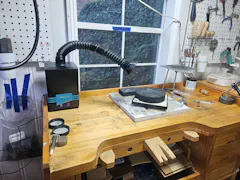
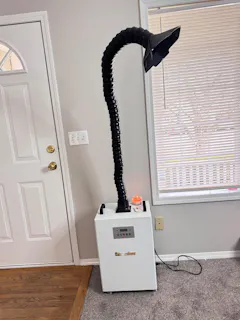
Place the extraction nozzle close to the soldering point without blocking your work area. Capturing fumes near the source improves filtration efficiency and helps keep smoke away from your breathing zone. Flexible extraction hoses and hoods can help improve positioning in compact workspaces.